AI for Data Analysts: The Skills You Actually Need in 2026
“AI is automating the mechanics of data analysis — SQL generation, chart creation, data cleaning, and basic reporting — but not the judgment to ask the right questions, interpret results in business context, or communicate insights to decision-makers. Data analysts who use AI tools are dramatically more productive; those who only know the mechanics are being displaced.”

Educational content only. AI-assisted and editorially reviewed. See full Legal Notice.
AI for Data Analysts: The Skills You Actually Need in 2026
Data analysis has always been partly craft and partly judgment. The craft — writing queries, cleaning data, building visualizations — can increasingly be automated. The judgment — deciding what questions matter, interpreting results in context, and influencing decisions — cannot.
The data analysts thriving in 2026 understand this distinction and have positioned accordingly.
---
What AI Is Automating in Data Analysis
SQL and Query Generation
This is the clearest example. AI tools can generate accurate SQL queries from natural language descriptions for most standard analytical needs.
Mode's AI assistant, Defog.ai, and Ask your data features in Tableau and Power BI allow analysts to describe what they want and receive the SQL to get it. For common patterns (aggregations, joins, filtering, window functions), AI generates correct queries faster than most analysts type them.
This does not eliminate the need for SQL knowledge — you still need to understand the output, validate the logic, and work with complex data models. But it eliminates a significant amount of mechanical query writing.
Data Cleaning and Preparation
Data cleaning — the task analysts report consuming 40-60% of their time — is being heavily automated. OpenRefine AI and AI features in Excel and Google Sheets handle:
dbt (data build tool) combined with AI code generation is transforming how data pipelines are built and maintained in modern data stacks.
Standard Reporting and Dashboards
Tableau Pulse and Power BI Copilot automatically generate narrative summaries of dashboard changes — alerting users to significant movements, anomalies, and trends in natural language. This replaces the weekly "the sales number went up 8% because..." email that analysts previously wrote manually.
Google Looker integrates AI to answer natural language questions about data directly, without requiring a custom dashboard for every question.
Basic Data Visualization
Generating standard charts (bar charts, line graphs, scatter plots) is largely automated in modern analytics platforms. The analytical decision about which chart type to use and how to design it for clarity still benefits from human judgment, but the execution is automated.
---
What AI Cannot Do in Data Analysis
Asking the Right Questions
The most important skill in data analysis is not knowing how to answer questions — it is knowing which questions are worth asking.
AI can analyze data you give it and answer questions you ask. It cannot identify which business problem deserves analytical attention, which metrics actually matter to a specific organization's strategy, or what data does not yet exist but should be collected.
This question-setting judgment — often called "business acumen" — is the highest-value skill in analytics and the least automatable.
Contextual Interpretation
Raw numbers rarely tell a complete story. The same 15% revenue decline means completely different things depending on market context, competitive dynamics, seasonality, and organizational decisions.
AI provides statistical summaries. Humans provide the contextual interpretation that makes statistics meaningful and actionable.
Navigating Organizational Complexity
Getting an organization to act on data insights requires navigating politics, competing priorities, trust relationships, and communication skill. Data that no one acts on is worthless regardless of how good the analysis is. Building the credibility and relationships to make data matter is irreducibly human work.
Statistical and Causal Reasoning
Correlation is not causation — but AI tools frequently present correlations as if they are actionable. Understanding when data is misleading, when sample sizes are insufficient, and when the analysis design is flawed requires statistical judgment that AI systems themselves frequently lack.
---
The Analyst Skills Growing in Value
1. Business Acumen
Understanding the business well enough to know which analytical questions drive decision-making. This requires time and organizational knowledge — AI accelerates the analytical execution once the right question is defined, but it cannot define the right question.
2. Data Storytelling
Translating complex analytical findings into clear, compelling narratives that non-technical decision-makers understand and act on. This combines communication skill, visual design judgment, and empathy for the audience — all human skills.
3. Experimental Design
Setting up rigorous A/B tests, understanding statistical power requirements, designing studies that produce valid causal conclusions. This requires statistical methodology knowledge that AI tools frequently get wrong when left unsupervised.
4. AI Tool Fluency
Proficiency with AI-augmented analytics platforms — knowing which tools to use for which tasks, how to validate AI outputs, and how to integrate AI into analytical workflows — is now a core competency.
5. Machine Learning Application
Being able to apply pre-built ML models (classification, forecasting, clustering, anomaly detection) to business problems using platforms like Google AutoML, DataRobot, or AWS SageMaker — without necessarily building models from scratch.
---
The Career Ladder in 2026
| Role | Avg. Salary (US) | Core Skill Emphasis |
|---|---|---|
| Junior data analyst | $65,000-85,000 | SQL, Excel, basic visualization |
| Mid-level analyst | $85,000-115,000 | Python, BI tools, business impact |
| Senior analyst / Analytics lead | $120,000-155,000 | Strategy, influence, ML application |
| Analytics manager | $140,000-180,000 | Team leadership, business partnership |
| Data scientist (ML focus) | $150,000-250,000 | ML modeling, statistical methods |
| Analytics engineer | $120,000-165,000 | Data modeling, dbt, modern data stack |
| AI/ML engineer | $180,000-320,000 | Model building, infrastructure |
---
The AI Tools Every Data Analyst Should Know
Google BigQuery + Vertex AI — The dominant cloud data warehouse with integrated AI capabilities. Natural language queries, automated ML, and AI-powered data exploration. The most common stack at companies using Google Cloud.
→ Google AI certification covers BigQuery and analytics AI
Microsoft Power BI Copilot — AI features built into the most widely deployed BI tool in enterprise. Generates DAX formulas from descriptions, creates visualizations from natural language, and summarizes dashboard insights automatically.
Tableau Pulse and Tableau AI — Automated insights, AI-powered chart recommendations, and natural language explanations of data changes.
GitHub Copilot — Dramatically accelerates Python and R data analysis coding. Generates code from comments, completes functions, and explains unfamiliar code.
Julius AI — Conversational data analysis tool that allows non-technical analysts to explore data through natural language dialogue.
DataRobot — Automated machine learning platform that builds, validates, and deploys predictive models from tabular data without deep ML engineering expertise.
---
The Bottom Line
The data analyst role is not disappearing — it is transforming. The mechanical execution layer is being automated, raising the floor of what analysts need to deliver to justify their compensation.
The analysts who will be most valuable in 2026 and beyond combine technical fluency with AI tools, genuine business understanding, and the communication skills to make data matter to decision-makers.
Those who have been succeeding purely on technical mechanics — writing fast queries, cleaning data efficiently — face the most disruption. The transition requires building the contextual and communication skills that machines cannot replicate.
→ Start with Google's AI certification — the most relevant for data and analytics professionals
Hardware Validation
Vetted tools for peak Careers performance in high-yield AI workflows.

Macbook Air
The world’s premier laptop for mainstream users. An unprecedented fusion of silent performance, ultra-slim aesthetics, and multi-day battery longevity.
Check Today's Price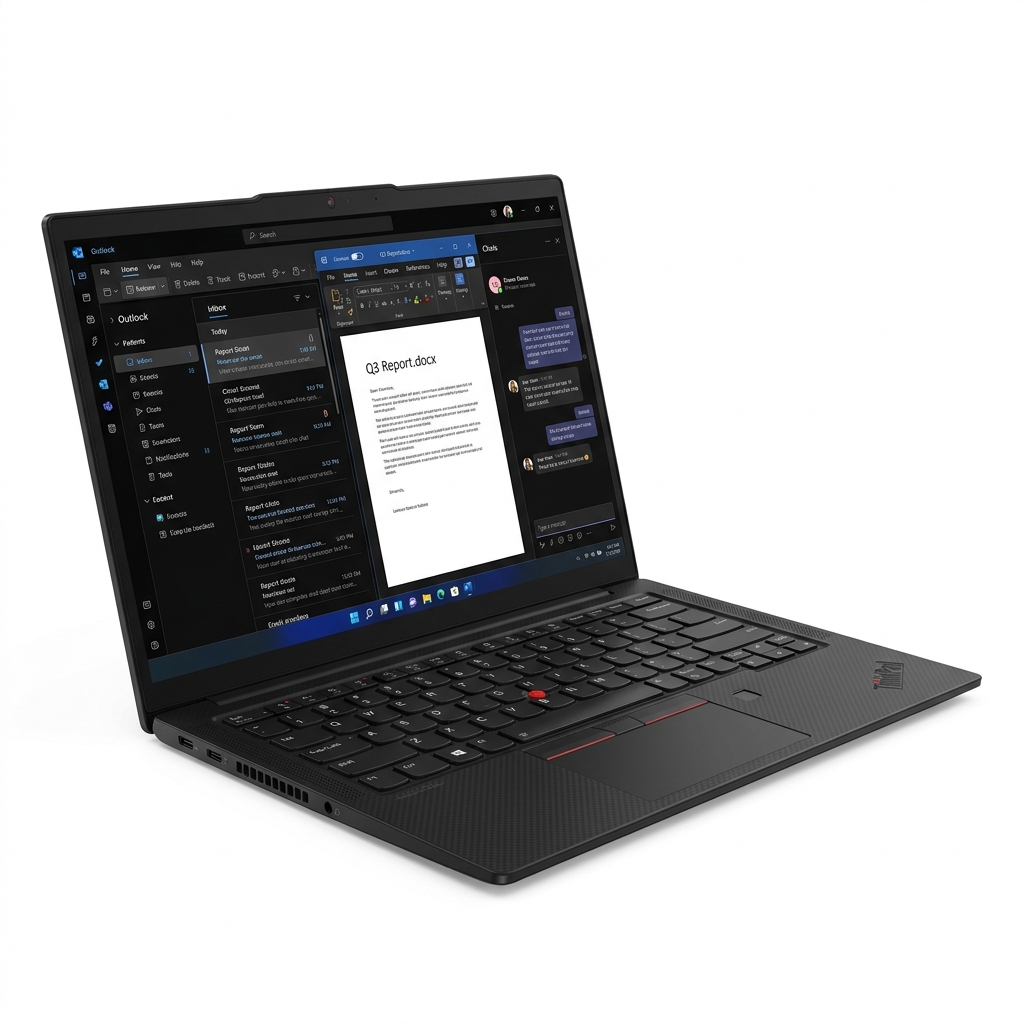
ThinkPad X1 Carbon
The ultimate enterprise workhorse. MIL-SPEC durability paired with the industry’s finest tactile keyboard; a timeless productivity tool.
Check Today's PriceTop AI Courses is an independent intelligence engine. We may earn an affiliate commission from qualifying purchases made through our "Market Links." This model ensures our architectural research remains decentralized, independent, and free for the global 2026 workforce.
AI and Analytics Certification
“Google's AI certifications include the most widely adopted data and analytics AI tools — BigQuery, Looker, and Google's AI-powered analytics stack.”
Explore Google AI Courses →The Architect's Library
Precision tools verified for 2026 AI ecosystems. Industrial-grade hardware for those who build the future.
Top AI Courses is an independent intelligence engine. We may earn an affiliate commission from qualifying purchases made through our "Market Links." This model ensures our architectural research remains decentralized, independent, and free for the global 2026 workforce.