AI for Small Business Owners: A Practical 2026 Guide
“The highest-ROI AI tools for small business owners in 2026 are: ChatGPT or Claude for content and customer communication, QuickBooks AI for bookkeeping, Tidio or Intercom AI for customer service automation, and Google Performance Max for advertising. Together these can save 10-20 hours per week and reduce operational costs by 20-30%.”

Educational content only. AI-assisted and editorially reviewed. See full Legal Notice.
AI for Small Business Owners: A Practical 2026 Guide
Small business owners are time-poor and resource-constrained by definition. The question isn't whether AI is impressive — it's whether it actually saves time and makes money for a business with a small team and a tight budget.
The answer in 2026 is yes, for specific use cases. Here is the practical guide.
---
The Highest-Impact Use Cases (Ranked by ROI)
1. Customer Communication and Service
This is often the single highest-ROI application of AI for small businesses, because customer communication consumes enormous time and is highly repetitive.
AI chatbots for customer service: Tools like Tidio, Intercom Fin, and Freshdesk AI handle FAQs, order status inquiries, appointment scheduling, and basic support issues automatically. For a business receiving 50+ customer inquiries per week, a chatbot pays for itself within 30 days.
The typical result: 60-80% of inquiries handled automatically, with genuinely complex or emotional issues escalating to the business owner or staff.
AI for email drafting: Business owners who handle their own customer correspondence report saving 1-3 hours per day using ChatGPT or Claude to draft customer emails, proposals, and follow-ups. You describe the situation, AI drafts the response, you review and send in 2 minutes.
2. Marketing Content
Small businesses compete with brands that have large marketing teams. AI partially closes this gap.
Social media content: Tools like Buffer AI and Hootsuite AI generate social media captions, schedule posts, and suggest optimal posting times based on audience engagement data. A week of social media content that previously took 3-4 hours now takes 30-45 minutes.
Blog and website content: AI-generated blog posts (with human review and local expertise added) improve SEO rankings and drive organic traffic. A small business publishing 2-3 AI-assisted blog posts per month consistently outperforms competitors publishing nothing.
Ad copy: Google Performance Max and Meta Advantage+ use AI to automatically generate and optimize ad variations. Small businesses using these AI-driven ad formats consistently see 20-30% lower customer acquisition costs than manually managed campaigns.
3. Bookkeeping and Financial Management
QuickBooks AI and Xero automatically categorize 90-95% of transactions, reconcile bank accounts, and generate financial reports without manual data entry.
For a business owner who was spending 4-6 hours per week on bookkeeping, this creates immediate recovery of time. The remaining time goes to reviewing AI categorizations and handling the exceptions.
Practical tip: Use AI bookkeeping plus a quarterly CPA review, rather than full-service bookkeeping. For most small businesses, this provides equivalent accuracy at 60-70% lower cost.
4. Hiring and HR
AI resume screening: For small businesses hiring without an HR department, AI tools (built into platforms like Indeed, LinkedIn, and Workable) screen resumes against job requirements and surface the best candidates. This reduces time-to-shortlist from days to hours.
AI job descriptions: Writing compelling, accurate job descriptions is harder than it looks. AI generates high-quality job descriptions from a brief description of the role and requirements in under 5 minutes.
Onboarding documentation: Creating training materials, SOPs, and onboarding documents — one of the most time-consuming HR tasks for small businesses — is significantly faster with AI assistance.
5. Operations and Administration
Meeting notes and action items: Tools like Otter.ai and Fireflies transcribe meetings and generate summaries with action items automatically. No more taking notes during calls.
Contract drafting: For standard agreements (service contracts, NDAs, vendor agreements), AI drafts a first version that a business owner or attorney reviews. This reduces legal costs significantly for businesses that previously paid attorneys to draft standard documents from scratch.
Research and competitive analysis: AI can research competitors, summarize industry news, analyze customer reviews, and draft competitor comparison reports in a fraction of the time manual research requires.
---
The AI Stack for a Typical Small Business
Monthly cost: $100-200 total
| Tool | Use Case | Monthly Cost |
|---|---|---|
| ChatGPT Plus or Claude Pro | General AI assistant, drafting, research | $20 |
| QuickBooks AI | Bookkeeping automation | $30-80 |
| Tidio or Intercom (Starter) | Customer service chatbot | $25-50 |
| Canva Pro (AI included) | Marketing visuals | $15 |
| Buffer AI or Hootsuite (Starter) | Social media | $15-20 |
| Total | $105-185 |
A small business generating $500,000 in annual revenue that saves 10 hours per week of owner time (valued at $100/hour) saves $52,000 per year in opportunity cost for $185/month in tools. The math is straightforward.
---
The Tools NOT Worth It for Small Businesses
Be realistic about what you need:
Start with the highest-frequency pain points and add tools as you see results.
---
Getting Started Without Getting Overwhelmed
Week 1: Start with ChatGPT Plus or Claude Pro. Use it for everything: answering business questions, drafting emails, writing social posts, summarizing documents. Get comfortable before adding specialized tools.
Week 2-4: Add the customer communication tool most relevant to your business (chatbot if you get repetitive inquiries; email AI if you handle lots of correspondence).
Month 2: Add bookkeeping AI if you don't already use it. The time savings are immediate and measurable.
Month 3: Add marketing AI tools (social scheduling, ad management) and evaluate what's working.
For a deeper foundation in how AI tools work — which helps you use them more effectively and make better decisions about which to adopt — Google's AI Essentials certification is the most practical option for non-technical business owners.
Hardware Validation
Vetted tools for peak Strategy performance in high-yield AI workflows.

Macbook Air
The world’s premier laptop for mainstream users. An unprecedented fusion of silent performance, ultra-slim aesthetics, and multi-day battery longevity.
Check Today's Price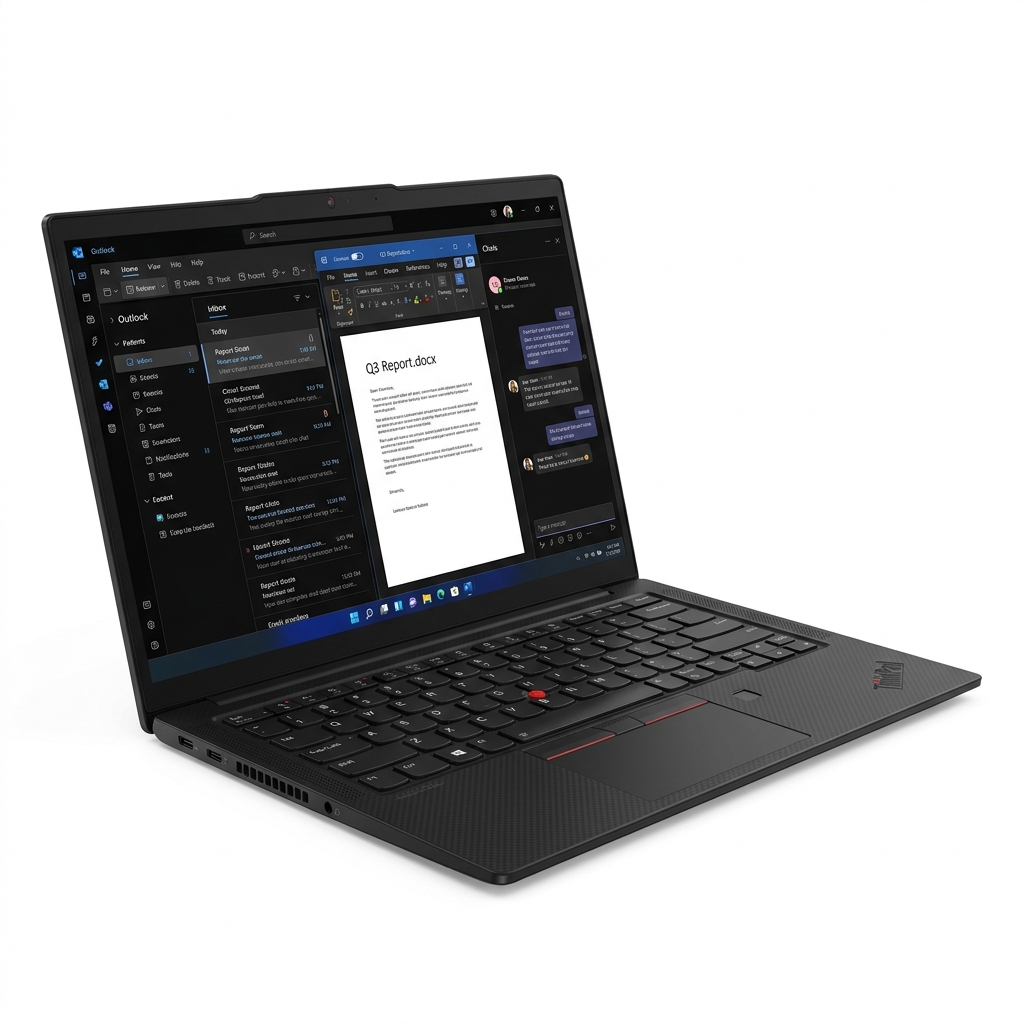
ThinkPad X1 Carbon
The ultimate enterprise workhorse. MIL-SPEC durability paired with the industry’s finest tactile keyboard; a timeless productivity tool.
Check Today's PriceTop AI Courses is an independent intelligence engine. We may earn an affiliate commission from qualifying purchases made through our "Market Links." This model ensures our architectural research remains decentralized, independent, and free for the global 2026 workforce.
Foundational AI Skills for Business Owners
“Google's AI certification provides the practical skills most relevant to small business applications — covering tools already embedded in Google Workspace.”
Explore Google AI Courses →The Architect's Library
Precision tools verified for 2026 AI ecosystems. Industrial-grade hardware for those who build the future.
Top AI Courses is an independent intelligence engine. We may earn an affiliate commission from qualifying purchases made through our "Market Links." This model ensures our architectural research remains decentralized, independent, and free for the global 2026 workforce.