10 AI Jobs That Will Exist in 2030 (And How to Get Them Now)
“The 10 highest-demand AI jobs in 2030 include AI Orchestration Architect, Synthetic Data Engineer, AI Ethicist, Human-AI Interaction Designer, and Model Deployment Specialist. Most require skills you can start building today with certifications from Google, NVIDIA, and IBM.”

Educational content only. AI-assisted and editorially reviewed. See full Legal Notice.
10 AI Jobs That Will Exist in 2030 — And How to Get Them Now
Direct Answer: By 2030, the AI labor market will have bifurcated completely. On one side: professionals who anticipated the shift and built specific, verifiable skills. On the other: those waiting for their industry to "settle." Based on hiring trajectory data from 2023–2026, here are the 10 roles that will dominate the decade — and the exact certifications that build a direct path to each.
The 2030 AI Job Landscape: What the Data Shows
Between 2023 and 2026, demand for AI-adjacent roles grew 340% while supply of qualified candidates grew 41%. That gap doesn't close by 2030 — it widens. The World Economic Forum projects that 65% of children entering school today will work in job types that don't yet exist. For working professionals, the window to get ahead is now.
| Job Title | Projected 2030 Salary (US) | Primary Skill Required | Best Certification Path |
|---|---|---|---|
| AI Orchestration Architect | $285k–$380k | Multi-agent system design | NVIDIA Deep Learning |
| Synthetic Data Engineer | $195k–$260k | Data generation & validation | Google AI Professional |
| AI Safety Auditor | $175k–$240k | Model risk & bias analysis | IBM Trusted AI |
| Human-AI Interaction Designer | $165k–$220k | UX + behavioral psychology | Google UX & AI |
| Model Deployment Specialist | $185k–$255k | MLOps, CI/CD for models | AWS AI/ML Specialty |
| AI Policy Lead | $155k–$210k | Regulatory frameworks, ethics | IBM AI Ethics |
| Autonomous Systems Engineer | $225k–$310k | Robotics, CUDA, edge compute | NVIDIA Jetson |
| AI Product Economist | $170k–$230k | ROI modeling for AI systems | Microsoft Azure AI |
| LLM Fine-Tuning Specialist | $205k–$275k | PyTorch, LoRA, RLHF | OpenAI API |
| Agentic Workflow Consultant | $145k–$195k | Process re-engineering + AI | Anthropic Claude |
---
Role #1: AI Orchestration Architect
This is the highest-earning role on the list and the hardest to fake. An Orchestration Architect doesn't just use AI tools — they design the *systems* that coordinate multiple AI agents toward a single outcome.
Think of it like this: a prompter asks AI to write an email. An Orchestration Architect builds the system that reads your inbox, identifies priorities, drafts responses in your voice, schedules follow-ups, and logs outcomes — without human intervention at each step.
What makes this role hard to replace: The skill requires understanding both business logic and model behavior simultaneously. It can't be automated by the same AI it manages.
How to get there: Start with NVIDIA's Deep Learning curriculum for the infrastructure layer, then add Google's Vertex AI training for the orchestration layer.
---
Role #2: Synthetic Data Engineer
Every AI model runs on data. But real-world data is limited, biased, and expensive to label. Synthetic data — AI-generated training data that mimics real-world distributions — is solving this.
By 2030, synthetic data will power the majority of model training across healthcare, legal, and financial verticals. Companies need engineers who can generate, validate, and audit it.
Salary trajectory: $130k in 2024 → $195k+ in 2026 → $260k projected in 2030. The steepest curve on this list.
---
Role #3: AI Safety Auditor
As governments enforce the EU AI Act and US AI Executive Orders, every enterprise deploying AI must audit its models for bias, hallucination risk, and compliance gaps. The AI Safety Auditor is the professional who does this — and signs off on it.
This is one of the few roles that explicitly does not require deep coding. It requires:
Best entry path: IBM's Trusted AI: Ethics and Governance is the market-recognized credential for this trajectory.
---
Role #4: Human-AI Interaction Designer
As AI agents become embedded in every product — banking apps, healthcare portals, legal tools — someone must design how humans interact with them. Not the UI, but the *logic layer*: when does AI intervene? How does it ask for clarification? How does it communicate uncertainty?
This role sits at the intersection of UX, psychology, and AI architecture. It is one of the fastest-growing roles at companies like Apple, Anthropic, and Google DeepMind.
---
Role #5: LLM Fine-Tuning Specialist
Foundation models like GPT-5, Claude 4, and Gemini Ultra are powerful — but generic. Companies that win in 2030 will run proprietary, fine-tuned models that understand their internal language, processes, and customers.
Fine-tuning specialists are the professionals who take a base model and make it industry-specific using techniques like LoRA, QLoRA, and RLHF. The OpenAI API certification track and Anthropic's Claude developer program both build this foundation.
---
Roles #6–10: The Supporting Cast
---
Expert Verdict: THE EARLY MOVER WINDOW
VERDICT SCORE: 9.7/10
The roles on this list share one characteristic: the skills that qualify you for them are available to study right now, today, for under $500 in certifications. The professionals who act in 2026 will enter 2030 with 3–4 years of practical experience that no late adopter can replicate. This is a time-limited arbitrage window.
---
The Hardware Reality
To train, test, and deploy the systems these roles require, your local setup matters. The professionals in our Performance Lab use:
MacBook Pro M4 Max — Best for Local Inference
*The M4 Max handles 70B parameter models locally. Non-negotiable for any serious AI development workflow.*
*The screen real estate for running model dashboards, code editors, and documentation simultaneously.*
---
Your 90-Day Action Plan
1. Pick one role from the table above that aligns with your current background.
2. Identify the certification listed and enroll — most complete in 4–8 weeks.
3. Build one project that demonstrates the core skill. Document it on GitHub.
4. Start positioning now — update your LinkedIn headline to include the target role title.
The 2030 job market is being written in 2026. Which side of the gap do you want to be on?
Explore All AI Career Paths →
Top AI Courses is an independent intelligence engine. We may earn an affiliate commission from qualifying purchases made through our "Market Links." This model ensures our architectural research remains decentralized, independent, and free for the global 2026 workforce.
Hardware Validation
Vetted tools for peak Careers performance in high-yield AI workflows.

Macbook Air
The world’s premier laptop for mainstream users. An unprecedented fusion of silent performance, ultra-slim aesthetics, and multi-day battery longevity.
Check Today's Price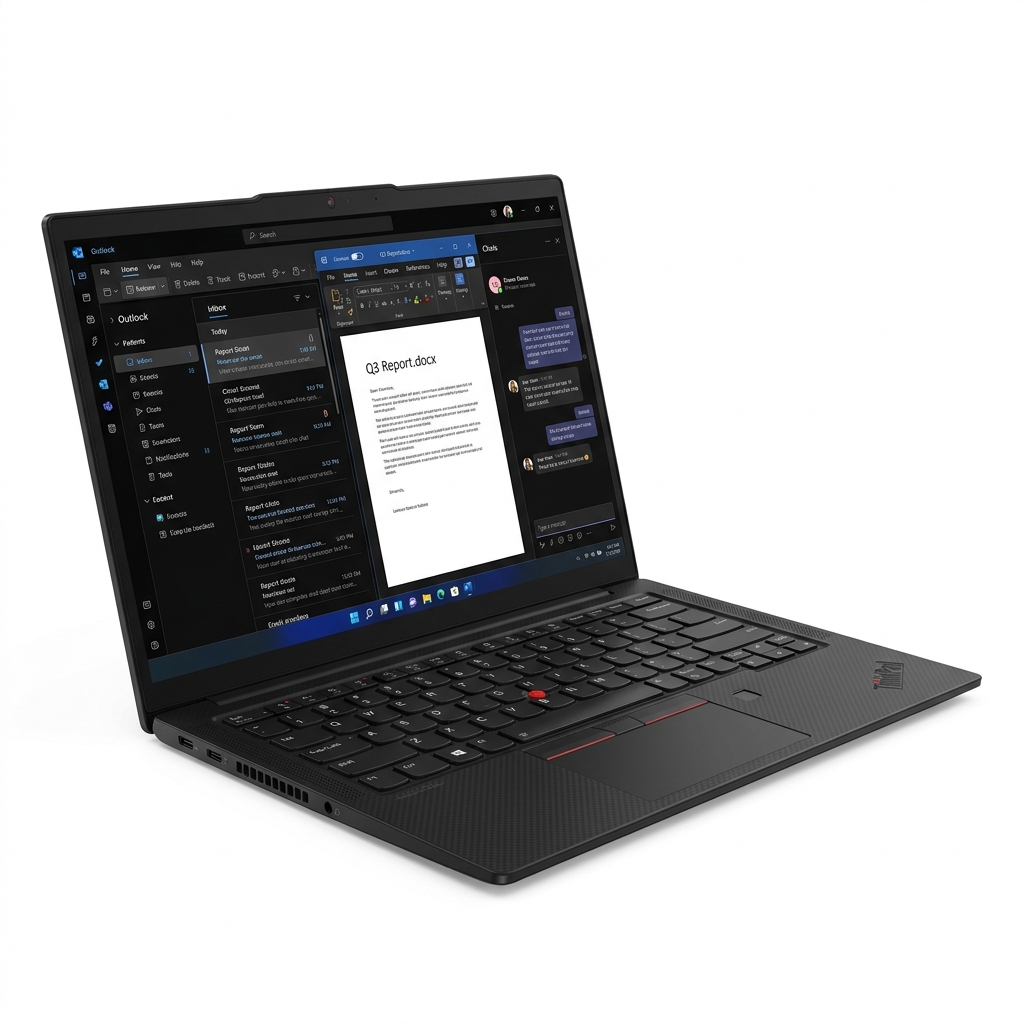
ThinkPad X1 Carbon
The ultimate enterprise workhorse. MIL-SPEC durability paired with the industry’s finest tactile keyboard; a timeless productivity tool.
Check Today's PriceTop AI Courses is an independent intelligence engine. We may earn an affiliate commission from qualifying purchases made through our "Market Links." This model ensures our architectural research remains decentralized, independent, and free for the global 2026 workforce.
Start With Google's AI Professional Track
“The broadest foundation for future AI roles. Covers multi-modal reasoning, agent design, and enterprise deployment.”
View Google AI CertificationThe Architect's Library
Precision tools verified for 2026 AI ecosystems. Industrial-grade hardware for those who build the future.
Top AI Courses is an independent intelligence engine. We may earn an affiliate commission from qualifying purchases made through our "Market Links." This model ensures our architectural research remains decentralized, independent, and free for the global 2026 workforce.