How AI Is Actually Changing Jobs in 2026: The Honest Guide
“In 2026, AI is eliminating repetitive analytical tasks while amplifying roles that require judgment, creativity, and domain expertise. The most accurate summary: AI is not replacing professionals — it's replacing the parts of professional work that shouldn't have required professionals in the first place. Workers who adapt are earning more; those who ignore the shift are seeing wages stagnate.”

Educational content only. AI-assisted and editorially reviewed. See full Legal Notice.
How AI Is Actually Changing Jobs in 2026: The Honest Guide
Direct Answer: AI is not coming for your job. It already came for parts of it — the parts that probably felt like the least meaningful work you did. The real question in 2026 is not "will AI take my job?" but "am I the person who uses AI to do 10x more, or am I the person being replaced by the person who does?"
The data from 2023–2026 is now substantial enough to give clear answers.
What the Data Actually Shows
Three years of labor market data since the mass adoption of generative AI has produced some surprising findings:
Finding 1: Total employment in knowledge work has not declined.
Despite widespread predictions of mass unemployment, total employment in the US, EU, and UK in knowledge work sectors has remained stable or grown from 2023–2026. AI has not caused mass unemployment yet.
Finding 2: The composition of work has changed dramatically.
The tasks within jobs have shifted. The 40% of a financial analyst's time spent on data compilation is now 4%. That time has been reallocated to interpretation, client communication, and strategic analysis — or the analyst was replaced by someone who can do all of those things at once.
Finding 3: The wage divergence is real and widening.
Within every profession, workers who've adopted AI tools effectively are earning 15–40% more than their peers. Workers who haven't adapted are experiencing real wage stagnation as their task contribution relative to AI-augmented peers has declined.
---
The AI Job Impact Matrix
| Job Category | AI Impact | Direction | 5-Year Trajectory |
|---|---|---|---|
| Data Entry & Processing | Extreme | Eliminated | -85% task value |
| Basic Document Drafting | Very High | Eliminated | -70% task value |
| Routine Customer Service | Very High | Mostly automated | -60% headcount |
| Entry-Level Research Analysis | High | Restructured | -40%, replaced by senior |
| Software Development (Junior) | High | Restructured | -30%, remaining roles pay more |
| Accounting (Compliance) | Medium | Augmented | AI handles routine, humans handle exceptions |
| Healthcare (Diagnostics) | Medium | Augmented | AI assists, doctors decide |
| Legal (Document Review) | Very High | Mostly automated | -65% task time |
| Teaching & Education | Low-Medium | Augmented | AI tutors, humans facilitate |
| Physical Trades | Low | Minimally affected | Stable, some automation in logistics |
| Senior Management | Low | Augmented | AI provides analysis, humans decide |
| Creative Direction | Low | Augmented | AI generates, humans direct |
| Therapy & Counseling | Very Low | Minimally affected | Human relationship is the product |
---
The Three Groups That 2026 Has Created
The labor market has bifurcated into three groups:
Group 1: The Amplified (Top ~20%)
These professionals have systematically incorporated AI tools into their workflows. They complete in 2 hours what previously took 8. They serve 3x the clients. They tackle projects they couldn't previously resource. Their income has risen 20–45% since 2023.
What they did: They took AI seriously early, got certified (Google, NVIDIA, IBM), built new workflows, and repositioned themselves as AI-augmented professionals rather than professionals who use AI.
Group 2: The Treading Water (Middle ~50%)
These professionals use AI tools inconsistently. They use ChatGPT for some tasks. They know Copilot exists. But they haven't rebuilt their workflows or repositioned their career narrative. Their income has stayed roughly flat — which means it's declining in real terms against inflation.
What they did: They acknowledged AI exists but treated it as a tool addition rather than a workflow transformation.
Group 3: The Falling Behind (Bottom ~30%)
These professionals have largely ignored the AI shift or are waiting for their industry to "settle." They're doing the same work the same way as 2022. Their task contribution relative to Group 1 has declined by 40–60%. Their career options are narrowing.
---
The Jobs Being Restructured Most Rapidly
Legal Profession
The AI for lawyers transformation is the most complete restructuring of any profession in 2026. Document review, which consumed 60–70% of junior associate time, is now 95% automated. Law firms have responded by promoting fewer junior associates, paying seniors more, and billing clients for AI-enhanced output at premium rates.
The net effect: junior associate hiring is down 35%. Senior associate and partner compensation is up 28%. The AI-augmented lawyer earns more; the un-augmented junior lawyer doesn't get hired.
Healthcare
AI diagnostics (radiology, pathology, dermatology) are matching or exceeding specialist accuracy for specific conditions. But the regulatory and liability framework means AI outputs require physician sign-off — creating an "AI interpretation" skill premium for physicians.
The physician who understands how to use, validate, and critically evaluate AI diagnostic outputs is worth significantly more than one who doesn't. The AI for Nurses transformation is similar — AI handles documentation and monitoring, humans handle care decisions.
Finance
Covered in depth in our AI for Finance Professionals guide. The summary: entry-level analysis is highly automated; senior judgment is increasingly premium.
Software Development
A counterintuitive finding: overall software development employment has grown despite AI code generation tools. The reason: AI tools reduced the cost of building software, which increased demand for software overall. But the composition shifted — junior developer roles declined 30%, while senior developer and AI systems roles grew 45%.
---
The Skills That AI Is Making More Valuable (Not Less)
As AI handles routine cognitive tasks, the skills that remain scarce — and therefore valuable — are specifically those AI struggles with:
1. Complex Judgment Under Uncertainty
AI is excellent at optimization under defined parameters. It's poor at making decisions when the right parameters aren't known. The professional who can define the problem correctly is worth more than the one who can execute against a defined problem.
2. Accountability and Trust
Regulated industries (medicine, law, finance, aviation) require licensed humans who can take legal and professional accountability for decisions. AI cannot be licensed. This creates a permanent floor for professional value in these domains.
3. Relationship Management at Scale
The most successful professionals in 2026 are using AI to increase the number of relationships they can maintain meaningfully — not to replace relationships with AI interactions. The human judgment of when to use AI and when to be present is becoming a distinct skill.
4. Cross-Domain Synthesis
AI is trained on domains. The professional who can synthesize across domains — who understands both the legal implications and the technical capabilities — is harder to replicate than any single-domain expert.
---
Expert Verdict: THE HONEST PICTURE
VERDICT SCORE: 9.9/10
The people experiencing AI as a threat in 2026 and the people experiencing it as an amplifier are often doing the same job. The difference is not their intelligence, their education, or their field. It's whether they made the decision to integrate AI tools into their workflow intentionally and systematically. That decision is still available. It becomes less available every quarter that passes.
---
The Professional's Response Framework
The data from 2026 points to one clear response strategy:
1. Audit your current role: What percentage of your tasks are routine, rule-based, or analytical? Those are at risk. What percentage require judgment, relationships, and accountability? Those are amplified.
2. Identify the AI tools for your domain: Each major function has leading AI tools. Know them. Use our course catalog to find certifications that teach them systematically.
3. Reposition from task executor to outcome owner: The professionals winning in 2026 describe their value in terms of outcomes, not tasks. Not "I write reports" but "I synthesize competitive intelligence into decisions."
4. Build and document AI-augmented work: Every project where you used AI to deliver better results is portfolio evidence. Build the portfolio. Share it.
---
The Adaptable Professional's Setup
*The foundation for AI-augmented professional work. The M4 Neural Engine handles local AI inference that keeps sensitive professional data off third-party servers.*
*For the AI-augmented professional spending more time on high-value client calls and less on administrative tasks — audio quality is now a professional signal.*
---
Find the Right AI Certification for Your Role →
Top AI Courses is an independent intelligence engine. We may earn an affiliate commission from qualifying purchases made through our "Market Links." This model ensures our architectural research remains decentralized, independent, and free for the global 2026 workforce.
Hardware Validation
Vetted tools for peak Trends performance in high-yield AI workflows.
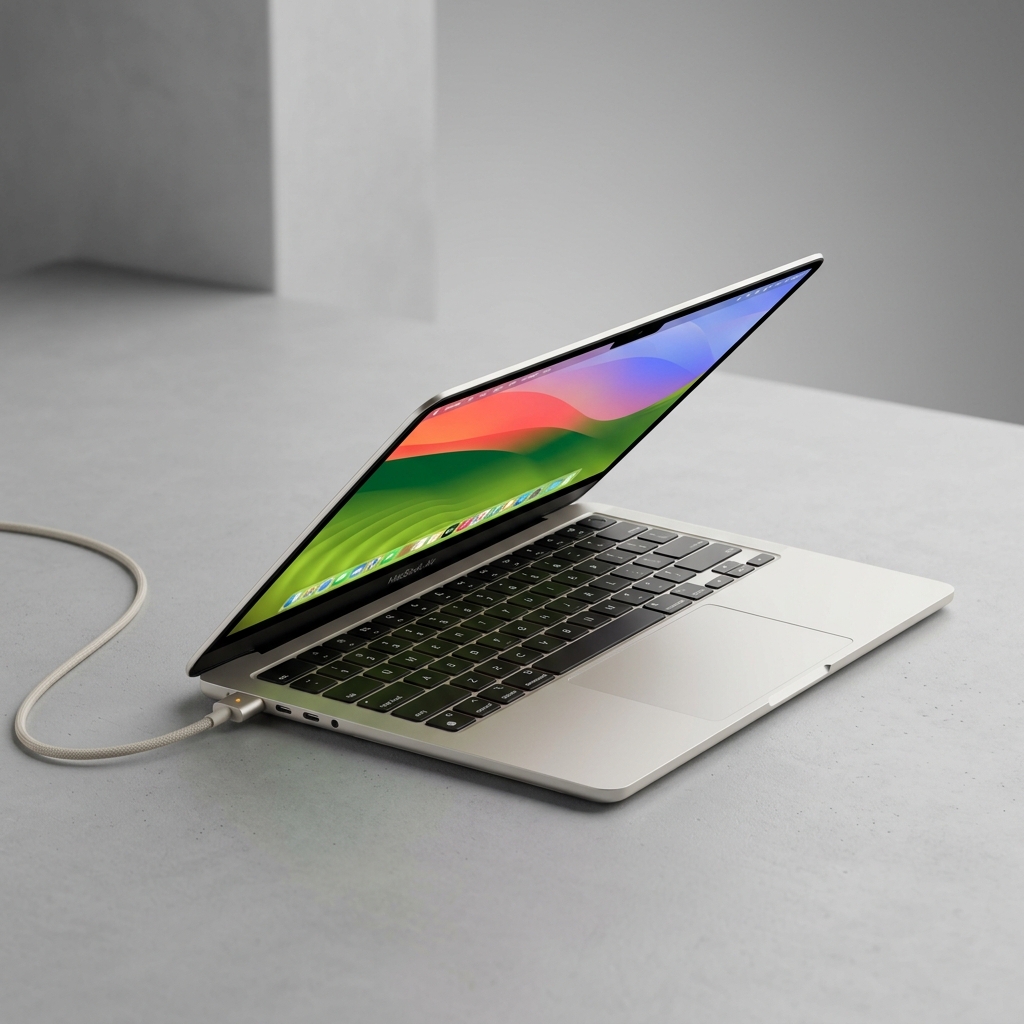
Macbook Air
The world’s premier laptop for mainstream users. An unprecedented fusion of silent performance, ultra-slim aesthetics, and multi-day battery longevity.
Check Today's Price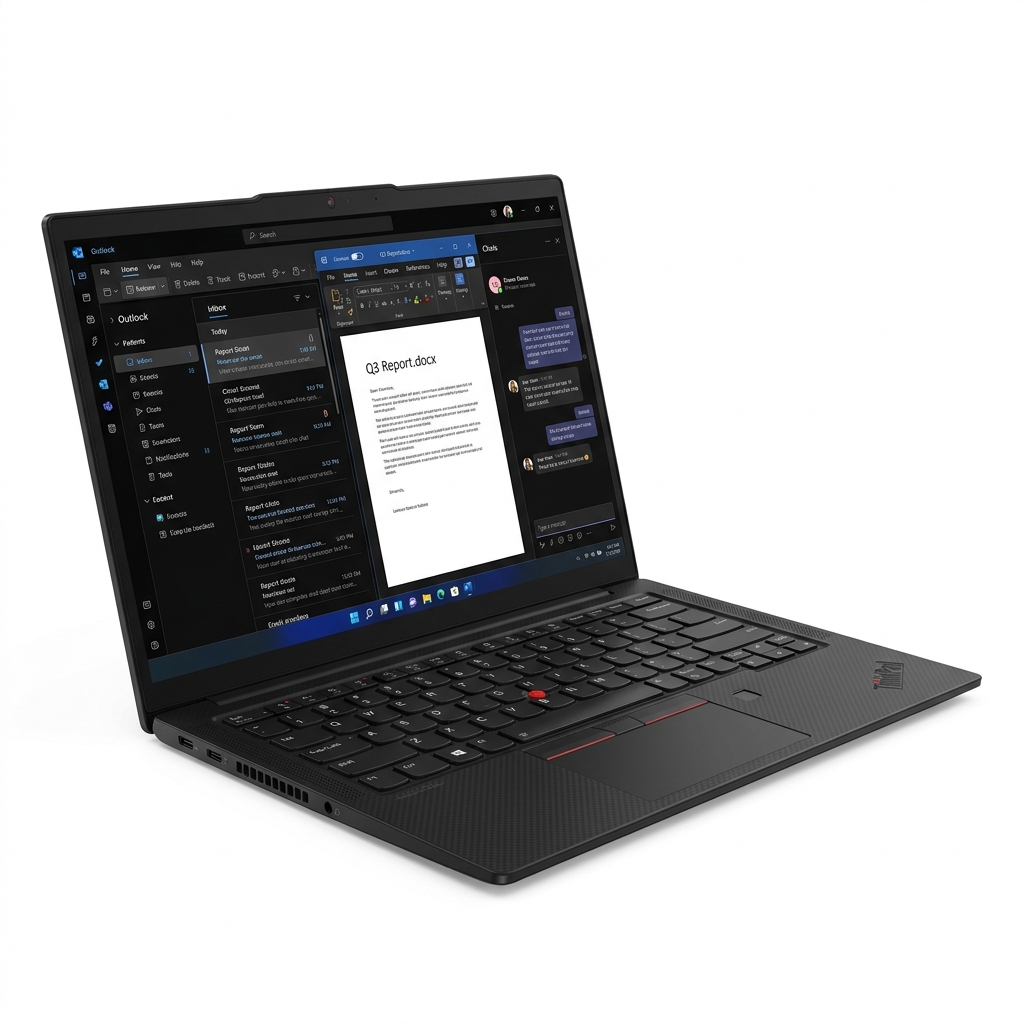
ThinkPad X1 Carbon
The ultimate enterprise workhorse. MIL-SPEC durability paired with the industry’s finest tactile keyboard; a timeless productivity tool.
Check Today's PriceTop AI Courses is an independent intelligence engine. We may earn an affiliate commission from qualifying purchases made through our "Market Links." This model ensures our architectural research remains decentralized, independent, and free for the global 2026 workforce.
Which AI Certifications Give You the Most Protection
“See the salary impact of specific certifications for your current role.”
Read the Salary GuideThe Architect's Library
Precision tools verified for 2026 AI ecosystems. Industrial-grade hardware for those who build the future.
Top AI Courses is an independent intelligence engine. We may earn an affiliate commission from qualifying purchases made through our "Market Links." This model ensures our architectural research remains decentralized, independent, and free for the global 2026 workforce.