How to Transition to an AI Career in 2026: The Step-by-Step Guide
“The fastest career transitions into AI in 2026 leverage existing domain expertise. A nurse transitions to clinical AI implementation; a lawyer transitions to AI governance; a marketer transitions to AI product manager. The pattern: combine your domain expertise (which AI cannot easily replicate) with AI skills (which you can learn), and target roles at the intersection. Most successful transitions take 6-18 months.”

Educational content only. AI-assisted and editorially reviewed. See full Legal Notice.
How to Transition to an AI Career in 2026: The Step-by-Step Guide
Career transitions into AI are happening at every level — from experienced professionals pivoting their existing expertise, to entry-level workers building AI skills before their first job. The patterns that work are now well-established enough to describe clearly.
The key insight: the most successful AI career transitions do not start from scratch. They build on existing expertise.
---
The Core Principle: Domain Expertise + AI Skills
The AI industry has a problem that computer science graduates cannot solve: most AI applications require deep understanding of the domain they are being deployed in.
A hospital deploying clinical AI needs people who understand both the AI system and clinical practice. A law firm deploying contract review AI needs people who understand legal practice well enough to evaluate AI outputs. A financial services company deploying AI compliance tools needs people who understand financial regulation.
Your existing domain expertise — the thing that makes you feel underqualified for AI roles — is actually a critical advantage in AI roles within your industry.
The formula: Existing domain expertise + AI skills = rarer and more valuable than AI skills alone
---
The Transition Paths by Background
From Healthcare (Nurse, Doctor, PA, Allied Health)
Target roles:
The path:
1. Get IBM's healthcare AI certification (most recognized in clinical settings)
2. Learn your hospital's existing AI tools (Epic AI features, ambient documentation) at depth
3. Volunteer for or lead AI-related projects at your current organization
4. Apply for informatics roles internally first — internal transitions are the most common path
Timeline: 6-12 months
→ IBM AI certifications for healthcare professionals
From Legal (Lawyer, Paralegal, Legal Operations)
Target roles:
The path:
1. Get deep on one legal AI tool — CoCounsel, Harvey, or Kira — to the level where you can train others
2. Write about AI in legal practice (LinkedIn articles, bar association publications) to build visible expertise
3. Get Microsoft AI certification (dominant in legal enterprise environments)
4. Target legal tech companies, AI companies needing legal expertise, or large firms building out AI practice groups
Timeline: 6-18 months
→ Microsoft AI certifications for legal professionals
From Finance/Accounting (CPA, FP&A, Controller)
Target roles:
The path:
1. Master Microsoft Copilot for Finance and Power BI AI features (your current tools, AI-enhanced)
2. Get Microsoft AI certification
3. Lead an AI tool implementation project at your current organization — volunteering for this is the most direct path
4. Build a case study documenting the efficiency and quality impact
Timeline: 6-12 months
→ Microsoft AI certifications for finance professionals
From Marketing/Communications
Target roles:
The path:
1. Build an AI-assisted content portfolio demonstrating production scale and quality
2. Get Google AI Essentials (most relevant for marketing) + Google Analytics certification
3. Apply to AI-native startups and SaaS companies as a marketing hire who understands the product from a user perspective
4. Your editorial judgment and communication skill are differentiators in a field where AI provides production capacity but not strategic direction
Timeline: 3-9 months
→ Google AI certifications for marketing professionals
From Education (Teacher, Professor, Instructional Designer)
Target roles:
The path:
1. Get Google AI Essentials (most widely adopted in education)
2. Build a portfolio of AI-integrated lesson designs and curriculum materials
3. Apply to EdTech companies (Coursera, Duolingo, Khan Academy, Chegg) who need product people who understand learning
4. Your pedagogy expertise is rare in tech companies — make it prominent
Timeline: 6-12 months
→ Google AI certifications for educators
From Software Engineering (General)
Target roles:
The path:
1. Build at least one deployed ML or AI application (not a tutorial — a real project solving a real problem)
2. Get AWS ML Associate or Google Professional ML Engineer certification
3. Study the specific ML stack your target companies use (PyTorch vs TensorFlow, specific cloud platforms)
4. Contribute to open source AI projects to build visible credibility
Timeline: 12-24 months for senior ML roles; 6-12 months for AI application engineering
→ AWS AI certifications for engineers
---
The Universal Transition Playbook
Regardless of background, successful AI career transitions follow this pattern:
Step 1: Define your specific target role (not "AI" generally — AI product manager at a healthcare company, AI trainer for legal content, etc.)
Step 2: Map the skill gap — What does your target role require? What do you have? What is the gap? Be specific.
Step 3: Build evidence of the gap-closing — Certification + one portfolio project that demonstrates the critical skill of your target role
Step 4: Leverage domain expertise explicitly — Your LinkedIn, resume, and cover letters should lead with the domain expertise + AI combination, not apologize for lacking pure tech background
Step 5: Target the right companies — AI-native startups in your industry, technology companies building AI for your industry, or large companies deploying AI in functions you understand
Step 6: Internal transition first — If your current employer is deploying AI, transitioning internally is dramatically faster than external job hunting. Volunteer for AI projects, build internal credibility, transition to the new role.
---
The Realistic Timeline and Salary Expectations
| Background | Target Role | Timeline | Salary Change |
|---|---|---|---|
| Any domain | AI trainer/annotator | 2-4 weeks | Lateral or slight increase |
| Business/marketing | Prompt engineer | 3-6 months | +20-40% |
| Healthcare | Clinical informatics | 6-12 months | +25-50% |
| Legal | Legal AI specialist | 6-18 months | +30-60% |
| Finance | Finance AI specialist | 6-12 months | +25-45% |
| Any domain (PM experience) | AI product manager | 12-24 months | +40-80% |
| Software engineering | ML engineer | 12-24 months | +50-100% |
The most important thing: start. The professionals who began AI transitions in 2023 are now in established AI roles with 2 years of experience. Those who waited are starting from the same zero — just 2 years later in a more competitive market.
Hardware Validation
Vetted tools for peak Careers performance in high-yield AI workflows.

Macbook Air
The world’s premier laptop for mainstream users. An unprecedented fusion of silent performance, ultra-slim aesthetics, and multi-day battery longevity.
Check Today's Price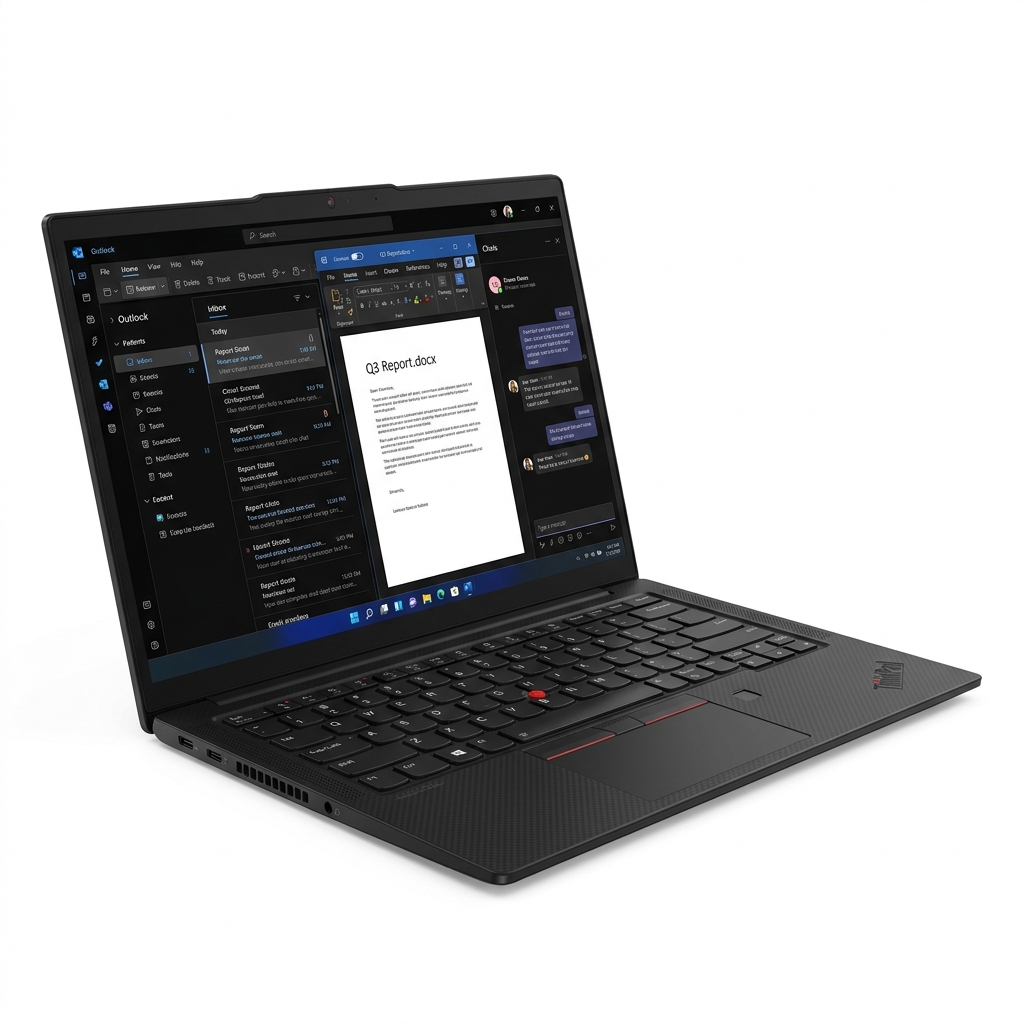
ThinkPad X1 Carbon
The ultimate enterprise workhorse. MIL-SPEC durability paired with the industry’s finest tactile keyboard; a timeless productivity tool.
Check Today's PriceTop AI Courses is an independent intelligence engine. We may earn an affiliate commission from qualifying purchases made through our "Market Links." This model ensures our architectural research remains decentralized, independent, and free for the global 2026 workforce.
Find Your AI Career Path
“Browse certifications organized by role and background. Find the right starting point for your specific transition.”
Browse AI Certifications →The Architect's Library
Precision tools verified for 2026 AI ecosystems. Industrial-grade hardware for those who build the future.
Top AI Courses is an independent intelligence engine. We may earn an affiliate commission from qualifying purchases made through our "Market Links." This model ensures our architectural research remains decentralized, independent, and free for the global 2026 workforce.