Will AI Replace Software Engineers? The Honest 2026 Analysis
“AI will not replace software engineers in 2026, but it is eliminating junior developer tasks at scale. AI coding assistants handle 30-50% of code generation at major tech companies. The demand is shifting from programmers who write boilerplate to engineers who architect systems, review AI output, and build the AI tools themselves.”

Educational content only. AI-assisted and editorially reviewed. See full Legal Notice.
Will AI Replace Software Engineers? The Honest 2026 Analysis
The question has been debated since GitHub Copilot launched in 2021. By 2026, we have enough data to answer it properly — not with speculation, but with actual hiring trends, productivity studies, and salary data.
The short answer: software engineering as a profession is not going away. The specific tasks that define junior developer roles are being heavily automated. And the engineers thriving in 2026 are not those who write the most code — they are those who build the best systems.
---
What AI Is Already Doing in Software Development
Code Generation
GitHub Copilot, Cursor, Amazon CodeWhisperer, and Claude for coding now generate meaningful portions of production code at every major tech company.
A GitHub study (2025) found that Copilot users:
Google's internal data shows AI tools generate approximately 25% of new code committed across their engineering organization.
Debugging and Code Review
AI tools identify bugs faster than most human reviewers. Cursor, Tabnine, and AI-integrated IDEs flag type errors, security vulnerabilities, and logic issues in real time — before code is even committed.
Tools like Snyk AI and Semgrep perform security-focused code review, catching injection vulnerabilities and dependency risks that would take hours of manual audit.
Test Generation
Writing unit tests is one of the most time-consuming and repetitive parts of development. AI tools now generate comprehensive test suites from function signatures and docstrings with high accuracy. CodiumAI and GitHub Copilot Tests have largely automated this task.
Documentation
AI-generated documentation — from docstrings to API references to README files — is now standard practice. Engineers who once spent days writing documentation now spend hours reviewing AI-generated drafts.
Simple Feature Development
CRUD applications, standard REST APIs, data pipeline scripts, and basic web features are increasingly generated from natural language descriptions with minimal human coding. Platforms like Vercel v0 (React UI generation) and Supabase AI (database schema and function generation) can produce working code from a brief specification.
---
The Engineering Jobs Growing Because of AI
The displacement of junior developer tasks has coincided with explosive growth in AI-related engineering roles:
1. ML Infrastructure Engineer
Builds and maintains the infrastructure that trains, serves, and monitors machine learning models at scale. Works with distributed training systems, GPU clusters, and model serving optimization.
Compensation at top companies: $280,000-$450,000 total comp
2. AI Systems Architect
Designs systems that incorporate AI components — deciding where AI provides value, how to handle AI failures, how to integrate AI outputs into larger systems reliably.
Average compensation: $220,000-$350,000
3. LLM Engineer / Prompt Infrastructure Engineer
Builds the prompt pipelines, evaluation frameworks, and orchestration systems that make LLMs production-ready. Works with RAG systems, fine-tuning pipelines, and output quality measurement.
Average compensation: $180,000-$280,000
4. AI Safety / Alignment Engineer
Emerging specialty focused on making AI systems behave reliably, safely, and according to specifications. High demand at frontier AI labs.
Average compensation: $200,000-$400,000
5. GPU / CUDA Engineer
The scarcest skill in tech in 2026. Writing optimized GPU kernels for AI training and inference requires deep hardware knowledge that is extremely difficult to automate. NVIDIA's training tracks cover this specialization.
Average compensation: $300,000-$500,000+
→ NVIDIA AI certifications — the path to GPU engineering
---
The Salary Divergence: Who Is Winning
| Engineer Profile | Median Total Comp | Trend |
|---|---|---|
| Junior dev, no AI skills | $95,000 | Declining demand |
| Mid-level, AI-tool proficient | $165,000 | Stable |
| Senior, specializes in AI systems | $280,000 | +30% YoY |
| ML Infrastructure Engineer | $380,000 | +45% YoY |
| CUDA / GPU specialist | $430,000+ | Critical shortage |
---
The Productivity Gap Is Real
The most important insight from 2026 labor data is this: AI has not reduced the number of engineers employed, but it has dramatically increased the output gap between high and low performers.
An AI-native engineer using Cursor, Claude, and GitHub Copilot ships 3-5x more features per sprint than a non-AI engineer doing equivalent work. This means companies can accomplish more with the same headcount — but it also means the engineers who don't adapt are increasingly uncompetitive for the roles that remain.
The question "will AI replace me?" is the wrong frame. The right frame is: "Is the engineer who uses AI replacing me?"
---
What AI Still Cannot Do in Software Engineering
---
The Path Forward for Software Engineers
If you are a student or bootcamp graduate: Learn to use AI coding tools fluently from day one. Treat AI as a senior pair programming partner and learn how to evaluate and improve its output. Your competitive advantage is not typing speed — it's architectural judgment.
If you are a mid-level engineer: Specialize. Broad generalist skills are increasingly automatable. Deep expertise in AI systems, security, distributed systems, or specific vertical domains is increasingly valuable and harder to automate.
If you are a senior engineer or tech lead: Your value is in the decisions that require contextual understanding of your organization's specific constraints. Invest in learning enough ML to make informed architectural decisions about AI integration. The NVIDIA AI certification track is the most technically rigorous path for engineers who want to specialize in AI infrastructure.
Hardware Validation
Vetted tools for peak Careers performance in high-yield AI workflows.
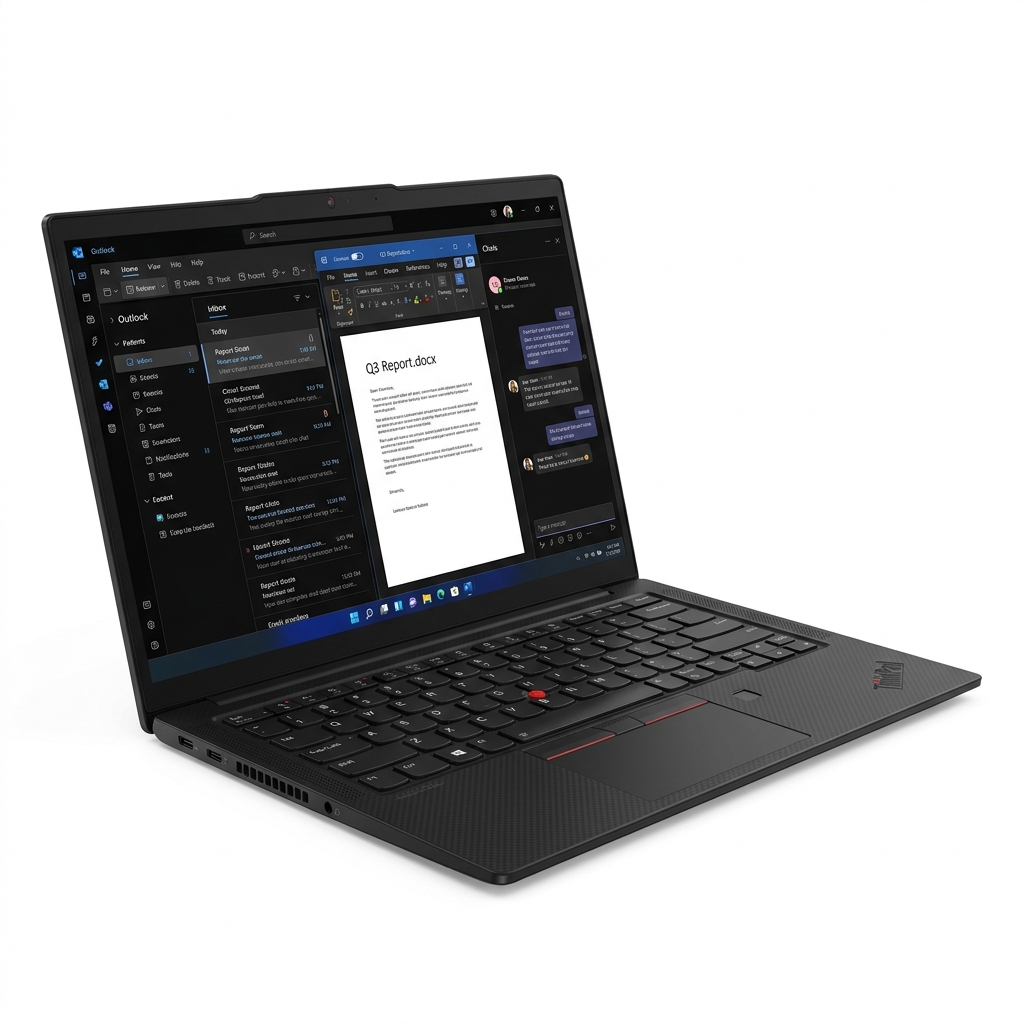
ThinkPad X1 Carbon
The ultimate enterprise workhorse. MIL-SPEC durability paired with the industry’s finest tactile keyboard; a timeless productivity tool.
Check Today's Price
Samsung Odyssey G9
The world’s most immersive ultrawide. Replaces dual-monitor setups with a continuous, curved panel that enhances deep focus.
Check Today's PriceTop AI Courses is an independent intelligence engine. We may earn an affiliate commission from qualifying purchases made through our "Market Links." This model ensures our architectural research remains decentralized, independent, and free for the global 2026 workforce.
Future-Proof Your Engineering Career
“Google's AI Engineering certifications teach you to build, deploy, and manage AI systems — the skills that make engineers indispensable.”
Explore Google AI Courses →The Architect's Library
Precision tools verified for 2026 AI ecosystems. Industrial-grade hardware for those who build the future.
Top AI Courses is an independent intelligence engine. We may earn an affiliate commission from qualifying purchases made through our "Market Links." This model ensures our architectural research remains decentralized, independent, and free for the global 2026 workforce.